World Time Zones Map.


How to: Exponents 

ParenthesisBracketsAbsolute ValueFractionExponentSubscriptSquare RootNth RootMatrixPoint
FunctionNatural LogarithmBase 10 LogarithmBase N LogarithmGreater Than or EqualLess Than or EqualDivision SymbolPiUnionIntersection
 

Return to the Purplemath home page

 The Purplemath Forums
Helping students gain understanding 
and self-confidence in algebra


powered by FreeFind


Return to the Lessons Index  | Do the Lessons in Order  |  Get "Purplemath on CD" for offline use  |  Print-friendly page

Exponents: Basic Rules (page 1 of 5)

Sections: Basics, Negative exponentsScientific notationEngineering notationFractional exponents


Exponents are shorthand for repeated multiplication of the same thing by itself. For instance, the shorthand for multiplying three copies of the number 5 is shown on the right-hand side of the "equals" sign in (5)(5)(5) = 53. The "exponent", being 3 in this example, stands for however many times the value is being multiplied. The thing that's being multiplied, being 5 in this example, is called the "base".

This process of using exponents is called "raising to a power", where the exponent is the "power". The expression "53" is pronounced as "five, raised to the third power" or "five to the third". There are two specially-named powers: "to the second power" is generally pronounced as "squared", and "to the third power" is generally pronounced as "cubed". So "53" is commonly pronounced as "five cubed".

When we deal with numbers, we usually just simplify; we'd rather deal with "27" than with "33". But with variables, we need the exponents, because we'd rather deal with "x6" than with "xxxxxx".

Exponents have a few rules that we can use for simplifying expressions.

  • Simplify (x3)(x4)   Copyright © Elizabeth Stapel 2000-2011 All Rights Reserved

    To simplify this, I can think in terms of what those exponents mean. "To the third" means "multiplying three copies" and "to the fourth" means "multiplying four copies". Using this fact, I can "expand" the two factors, and then work backwards to the simplified form:

      (x3)(x4) = (xxx)(xxxx) 
                
      xxxxxxx 
                
      x7

Note that x7 also equals x(3+4). This demonstrates the first basic exponent rule: Whenever you multiply two terms with the same base, you can add the exponents:

      x m ) ( x n ) = x( m + n )

However, we can NOT simplify (x4)(y3), because the bases are different: (x4)(y3) = xxxxyyy = (x4)(y3). Nothing combines.

  • Simplify (x2)4

    Just as with the previous exercise, I can think in terms of what the exponents mean. The "to the fourth" means that I'm multiplying four copies of x2:

      (x2)= (x2)(x2)(x2)(x2) 
             
      = (xx)(xx)(xx)(xx) 
             
      xxxxxxxx 
             
      x8

Note that x8 also equals x( 2×4 ). This demonstrates the second exponent rule: Whenever you have an exponent expression that is raised to a power, you can multiply the exponent and power:

      xm ) n = x m n

If you have a product inside parentheses, and a power on the parentheses, then the power goes on each element inside. For instance, (xy2)3 = (xy2)(xy2)(xy2) = (xxx)(y2y2y2) = (xxx)(yyyyyy) = x3y6 = (x)3(y2)3. Another example would be:

    [ x/y ]^2 = (x^2) / (y^2)

Warning: This rule does NOT work if you have a sum or difference within the parentheses. Exponents, unlike mulitiplication, do NOT "distribute" over addition.

For instance, given (3 + 4)2, do NOT succumb to the temptation to say "This equals 32 + 42 = 9 + 16 = 25", because this is wrong. Actually, (3 + 4)2 = (7)2 = 49, not 25. When in doubt, write out the expression according to the definition of the power. Given (x – 2)2, don't try to do this in your head. Instead, write it out: "squared" means "times itself", so (x – 2)2 = (x – 2)(x – 2) = xx – 2x – 2x + 4 = x2 – 4x + 4.

The mistake of erroneously trying to "distribute" the exponent is most often made when the student is trying to do everything in his head, instead of showing his work. Do things neatly, and you won't be as likely to make this mistake.

There is one other rule that may or may not be covered at this stage:

    Anything to the power zero is just "1".

This rule is explained on the next page. In practice, though, this rule means that some exercises may be a lot easier than they may at first appear:

  • Simplify [(3x4y7z12)5 (–5x9y3z4)2]0
  • Who cares about that stuff inside the square brackets? I don't, because the zero power on the outside means that the value of the entire thing is just 1.

    Division: 


    Return to the Lessons Index  | Do the Lessons in Order  |  Get "Purplemath on CD" for offline use  |  Print-friendly page

    Polynomial Division: Simplification
         and Reduction 
    (page 1 of 3)

    Sections: Simplification and reduction, Polynomial long division


    There are two cases for dividing polynomials: either the "division" is really just a simplification and you're just reducting a fraction, or else you need to do long polynomial division (which is covered on the next page).

    • Simplify (2x + 4)/2

      This is just a simplification problem, because there is only one term in the polynomial that you're dividing by. And, in this case, there is a common factor in the numerator (top) and denominator (bottom), so it's easy to reduce this fraction. There are two ways of proceeding. I can split the division into two fractions, each with only one term on top, and then reduce:

        2x/2 + 4/2 = x + 2

      ...or else I can factor out the common factor from the top and bottom, and then cancel off:

        2(x + 2)/2 = x + 2

      Either way, the answer is the same: x + 2

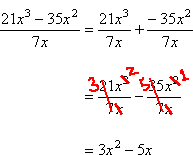
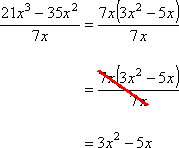
    • Simplify (21x^3 - 35x^2) / (7x)

      Again, I can solve this in either of two ways: by splitting up the sum and simplifying each fraction separately:   Copyright © Elizabeth Stapel 2000-2011 All Rights Reserved

        21x^3/7x - 25x^2/7x = 3x^2 - 5x

      ...or else by taking the common factor out front and canceling it off:

        7x(3x^2 - 5x)/7x = 3x^2 - 5x

      Either way, the answer is the same:  3x2 – 5x

    Note: Most books don't talk about the domain at this point. But if your book does, you will need to note, for the above simplification, that x cannot equal zero. That is, for the simplified form to be completely mathematically equal to the original expression, the solution would need to be "3x2 – 5x, for all x not equal to 0".

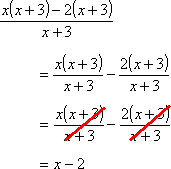
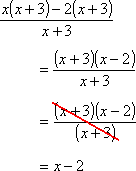
    • Simplify  [ x(x + 3) - 2(x + 3) ] / (x + 3)

      I can split the sum and reduce each fraction separately:

        x(x + 3)/(x + 3) - 2(x + 3)/(x + 3) = x - 2

      The numerator (top) does indeed have a common factor; it's just a rather large one. Since both terms contain the factor "x + 3", then this is a common factor, and may be factored out front:

        (x + 3)(x - 2)/(x + 3) = x - 2

      Either way, the answer is the same: x – 2

      POLYGONS:

      Polygons

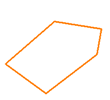
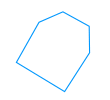
      A polygon is a plane shape with straight sides.

      Is it a Polygon?

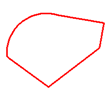
      Polygons are 2-dimensional shapes. They are made of straight lines, and the shape is "closed" (all the lines connect up).

      Polygon 
      (straight sides)
      Not a Polygon 
      (has a curve)
      Not a Polygon 
      (open, not closed)

      Polygon comes from Greek. Poly- means "many" and -gon means "angle".

      Types of Polygons

      Simple or Complex

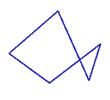
      simple polygon has only one boundary, and it doesn't cross over itself. A complex polygon intersects itself!

      Simple Polygon
      (this one's a Pentagon)
      Complex Polygon
      (also a Pentagon)

      Concave or Convex

      convex polygon has no angles pointing inwards. More precisely, no internal angles can be more than 180°.

      If there are any internal angles greater than 180° then it is concave. (Think: concave has a "cave" in it)

      ConvexConcave

      Regular or Irregular

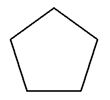
      If all angles are equal and all sides are equal, then it is regular, otherwise it is irregular

      RegularIrregular

      More Examples

      Complex Polygon 
      (a "star polygon", in 
      this case, a pentagram)
      Concave Octagon

      Irregular Hexagon


      Names of Polygons

        If it is a Regular Polygon...
      NameSidesShapeInterior Angle
      Triangle (or Trigon)360°
      Quadrilateral (or Tetragon)490°
      Pentagon5108°
      Hexagon6120°
      Heptagon (or Septagon)7128.571°
      Octagon8135°
      Nonagon (or Enneagon)9140°
      Decagon10144°
      Hendecagon (or Undecagon)11147.273°
      Dodecagon12150°
      Triskaidecagon13 152.308°
      Tetrakaidecagon14 154.286°
      Pentadecagon15 156°
      Hexakaidecagon16 157.5°
      Heptadecagon17 158.824°
      Octakaidecagon18 160°
      Enneadecagon19 161.053°
      Icosagon20 162°
      Triacontagon30 168°
      Tetracontagon40 171°
      Pentacontagon50 172.8°
      Hexacontagon60 174°
      Heptacontagon70 174.857°
      Octacontagon80 175.5°
      Enneacontagon90 176°
      Hectagon100 176.4°
      Chiliagon1,000 179.64°
      Myriagon10,000 179.964°
      Megagon1,000,000 ~180°
      Googolgon10100 ~180°
      n-gonn(n-2) × 180° / n

      For polygons with 13 or more sides, it is OK (and easier) to write "13-gon", "14-gon" ... "100-gon", etc...


Metric System of Measurement

(Correctly called "SI")

The metric system is a system of measuring. It has three basic units:

m the meter for length
kg the kilogram for mass
s the second for time
With those three simple measurements 
we can measure nearly everything in the world!


Examples:

Meter (Metre in UK)

The length of this guitar
is about 1 meter:
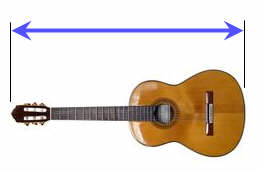
1 meter
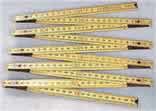
 When unfolded this ruler 
measures 2 meters
ruler
   

Kilogram

1 kilogram

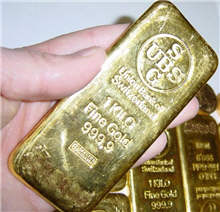
This gold bar has a
mass of 1 kilogram.


Dictionary
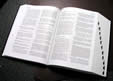
A dictionary has a 
mass of about 1 kilogram.

Second

1 second is about as long as it takes to say "one thousand and one"

Larger or Smaller

But what if we want to talk about really big or really small things?

Answer: we can use Metric Number Prefixes

  • like "kilo" (a thousand)
  • and "milli" (one thousandth)
  • and so on

Example: something that is 1,000 meters is a "kilometer"

Something that is one thousandth of a second is a "millisecond"

In fact the kilogram already uses this method, because it is a thousand grams, a kilogram.

So one thousandth (1/1000) of a kilogram is simply a "gram"

Here is a quick summary of the special prefixes:

Large Numbers

Namedecahectokilomegagigaterapetaexazettayotta
SymboldahkMGTPEZY
Factor10110210310610910121015101810211024

Example A million liters would be called a megaliter and abbreviated ML

Small Numbers

Namedecicentimillimicronanopicofemtoattozeptoyocto
Symboldcmµnpfazy
Factor10-110-210-310-610-910-1210-1510-1810-2110-24

Example A thousandth of a second would be called a millisecond and abbreviated ms

Making Other Units

You can also combine the meter, kilogram and second to make new Units of Measurement!

Example: Speed

Speed is how far something moves over a period of time

So it can be measured in meters per second

It means: How many meters does something travel in one second

You could write it as meters/second, or simply m/s

Here are a few common units that are based on the meterkilogram and second:

Area

Square Meter

squareArea is length by length, so the basic unit of area is a square that is 1 meter on each side.

The Unit is meters × meters, which is written m2 (square meters).

Volume:

Cubic Meter

cubeVolume is length by length by length, so the basic unit of volume is a cube that is 1 meter on each side.

The Unit is meters × meters × meters, which is written 
m3 (cubic meters).

Liter (Litre in UK)

So, a cube that is 1 meter on each side is a cubic meter (m3) ...

... and that is also equal to 1,000 liters.

1 m3 = 1,000 Liters

Liter is abbreviated L (some people use lowercase l, but that looks too much like 1).

So a liter is actually one-thousandth of a cubic meter.

1 Liter = 1/1000 m3

Another way of thinking about a liter is:

  • A box that is 0.1 meters (10 cm) on each side,
  • One square meter that is millimeter thick.

Time

Hour

An hour is 60 minutes, and a minute is 60 seconds, so an hour is:

  • 60 × 60 = 3,600 seconds

Day

A day is 24 hours so:

  • 1 day = 24 × 60 × 60 = 86,400 second

Speed

Speed in meters per second (m/s)

squareThis is a combination of two units (meters and seconds) to make a new one (m/s).

If something is traveling at 1 m/s it moves 1 meter every second.

Speed in kilometers per hour (km/h)

A bit more complicated, but a kilometer has 1,000 meters, and an hour has 3,600 seconds, so a kilometer per hour is:

  • 1000 / 3600 = 1/3.6 = 0.277... m/s

How did I know to make it 1000/3600, and not 3600/1000 (the other way around)? Read how to Safely Convert From One Unit to Another.

Acceleration

Acceleration is how fast Speed changes.

If something accelerated from a Speed of 5 m/s (5 meter per second) to 6 m/s (6 meters per second)in just one second, it has accelerated by 1 meter per second per second!

That is two lots of "per second" and is written m/s2:

Force

Force is usually measured in the Unit of Newtons, an important measurement in Physics and Engineering.

But a Newton is actually 1 kg · m / s2 (one kilogram-meter per second-squared).

So force is actually based on the meterkilogram and second.

One way of looking at this is how much force it takes to make 1 kg accelerate at 1 m/s2.

But even if you don't fully understand this, it shows you that force is a combination of the three basic units.

SI

The original Metric System was first developed in France back in 1670.

The modern version, (since 1960) is correctly called "International System of Units" or "SI" (from the French "Système International").

So you should really call it "SI", but mostly people just call it "Metric".

A few special units are also needed to complete the SI System:

  • ampere for electric current,
  • kelvin for temperature,
  • mole for the amount of substance, and
  • candela for luminous intensity

So the complete list is:

QuantityNameSymbol
Lengthmetrem
Masskilogramkg
Timeseconds
   
Electrical CurrentampereA
TemperaturekelvinK
Amount of substancemolemol
Luminous intensitycandelacd

Here are some  worksheets!

Name:____________________
Math is Fun Worksheet
"print your own worksheets at mathsisfun.com"
Date:____________________

1
2
3
4
5


Count the pictures, and write the answer in the box


Name:____________________
Math is Fun Worksheet
"print your own worksheets at mathsisfun.com"
Date:____________________

Multiply
1:
489
× 3 89/100

 
2:
476
× 9 78/100

 
3:
586
× 4 21/100

 
4:
85 5/10
× 55 5/10

 
5:
272
× 7 77/100

 
6:
64/100
× 165

 
7:
85/100
× 229

 
8:
78/100
× 447

 
9:
41 6/10
× 83 4/10

 
10:
37/100
× 533

 
11:
778
× 9 22/100

 
12:
818
× 3 99/100

 
13:
19
× 88 6/10

 
14:
26/100
× 741

 
15:
46/100
× 914

 
16:
38/100
× 379

 
17:
5/10
× 765

 
18:
79
× 54 4/10

 
19:
694
× 8 6/10

 
20:
28
× 69 8/10


21:
13 4/10
× 47 7/10

 
22:
77/100
× 295

 
23:
98/100
× 385

 
24:
84 2/10
× 61 1/10

 
25:
84
× 25 8/10


This is our variety! Hope you've enjoyed the hard effort we've put forth! 

This free website was made using Yola.

No HTML skills required. Build your website in minutes.

Go to www.yola.com and sign up today!

Make a free website with Yola